✨ New Arrivals Just Dropped!Explore

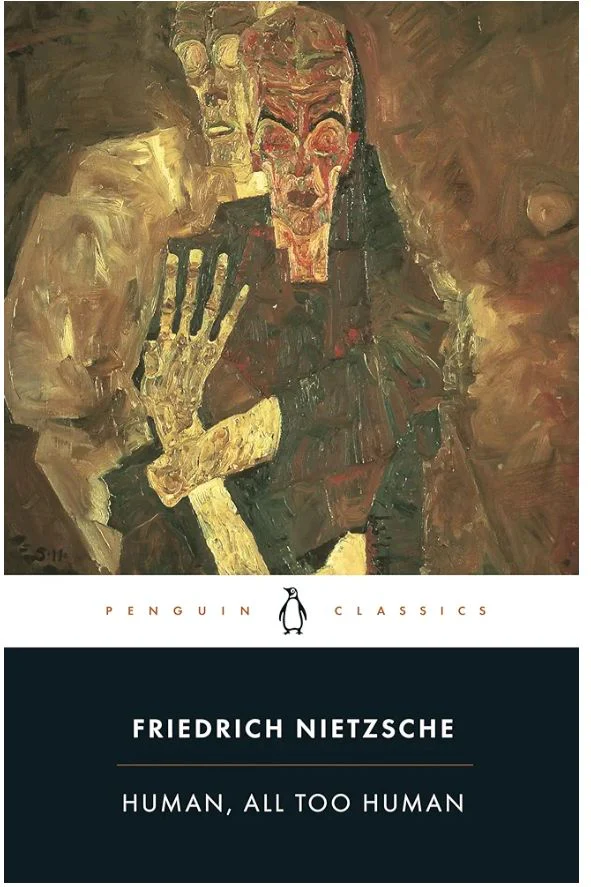
Human, All Too Human Book by Friedrich Nietzsche
Written after Nietzsche had ended his friendship with Richard Wagner and had been forced to leave academic life through ill health, Human, All Too Human (1878) can be read as a monument to his personal crisis. It also marks the point when he matured as a philosopher, rejecting the German romanticism espoused by Wagner and Schopenhauer and instead returning to sources in the French Enlightenment. Here he sets out his unsettling views in a series of 638 stunning aphorisms - assessing subjects ranging from art to arrogance, boredom to passion, science to vanity and women to youth. This work also contains the seeds of concepts crucial to Nietzsche''s later philosophy, such as the will to power and the need to transcend conventional Christian morality. The result is one of the cornerstones of his life''s work
Select View All Available Formats & Editions
From $0.43
Original: $1.22
-65%Human, All Too Human
Book by Friedrich Nietzsche—
$1.22
$0.43Human, All Too Human Book by Friedrich Nietzsche
Written after Nietzsche had ended his friendship with Richard Wagner and had been forced to leave academic life through ill health, Human, All Too Human (1878) can be read as a monument to his personal crisis. It also marks the point when he matured as a philosopher, rejecting the German romanticism espoused by Wagner and Schopenhauer and instead returning to sources in the French Enlightenment. Here he sets out his unsettling views in a series of 638 stunning aphorisms - assessing subjects ranging from art to arrogance, boredom to passion, science to vanity and women to youth. This work also contains the seeds of concepts crucial to Nietzsche''s later philosophy, such as the will to power and the need to transcend conventional Christian morality. The result is one of the cornerstones of his life''s work
Product Information
Product Information
Shipping & Returns
Shipping & Returns
Description
Written after Nietzsche had ended his friendship with Richard Wagner and had been forced to leave academic life through ill health, Human, All Too Human (1878) can be read as a monument to his personal crisis. It also marks the point when he matured as a philosopher, rejecting the German romanticism espoused by Wagner and Schopenhauer and instead returning to sources in the French Enlightenment. Here he sets out his unsettling views in a series of 638 stunning aphorisms - assessing subjects ranging from art to arrogance, boredom to passion, science to vanity and women to youth. This work also contains the seeds of concepts crucial to Nietzsche''s later philosophy, such as the will to power and the need to transcend conventional Christian morality. The result is one of the cornerstones of his life''s work